
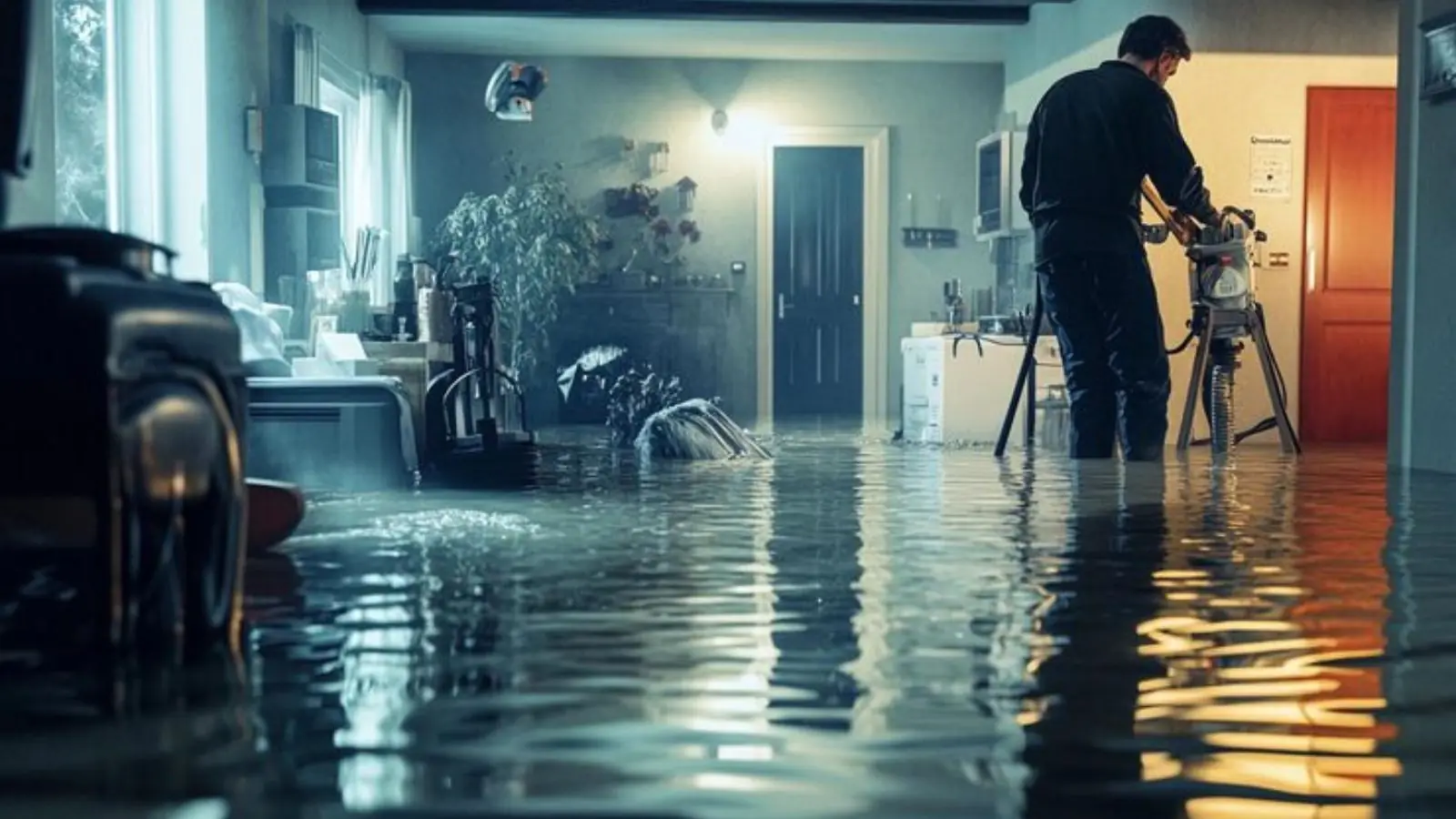
Water mitigation is the emergency work that keeps water damage from spreading through a Tarzana home, and it starts when you call. Our line is answered 24/7, including nights and weekends. While you wait, shut off the main water valve if a pipe is the source, lift valuables off wet floors, and stay away from any outlet or panel the water has reached.
Mitigation is not the rebuild. It covers stopping the source, pulling out standing water, mapping where moisture went and drying structure before it fails. Replacing drywall, flooring and paint comes afterward and is covered on the water damage repair page.
What happens in the first 72 hours
A mitigation visit follows a fixed order because each step depends on the one before it. Skipping ahead to fans before the water is out only pushes moisture into places that were dry.
- Find and stop the source, whether that is a supply line, a failed appliance hose or a roof opening.
- Remove standing water with pumps and extraction units, then lift wet carpet pad that cannot be dried in place.
- Map the damage with moisture meters and a thermal imaging camera, and record readings room by room.
- Set air movers and low-grain refrigerant (LGR) dehumidifiers to match the size and class of the loss.
- Return to re-read moisture daily and remove equipment only when wet materials reach their dry standard.
The industry reference for this sequence is ANSI/IICRC S500, the published standard for professional water damage restoration. It is fair to ask any company whether its crews work to it.
Structural drying: getting wet framing, subfloors and wall cavities dry
Water travels. A spill that looks like a wet patch on laminate can run under baseboards, wick up drywall and settle in the subfloor, where you cannot see it. Structural drying removes that hidden moisture instead of covering it with fresh paint.
Crews pull baseboards, open wall cavities where readings call for it, and point air movers so air skims across wet surfaces. Dehumidifiers then pull the moisture out of the air so it does not settle back into the framing. Most jobs run several days, and the daily readings, not the calendar, tell the crew when equipment can leave.
Hardwood and engineered floors need a gentler approach than carpet. Fast drying can save a floor that slow drying would cup, which is why the first call matters more than the first repair quote.
Wet drywall, a soft floor or a musty smell after a leak?
Most people do not search for a trade name when they find a damp baseboard or a stain spreading across a ceiling. They notice carpet that squishes, a wall that feels cool, or a smell that was not there last week. Each of those is a sign that moisture is still inside the structure, and drying it is what the trade calls water mitigation.
Why a Tarzana water problem can start outside your walls
Not every wet house is a plumbing failure inside the house. In October 2013 an eight-inch water main installed in the 1950s broke on the 5000 block of Topeka Drive in Tarzana, flooded streets and yards, and left as many as 25 homes without water until the next morning, according to a CBS Los Angeles report. The Los Angeles Department of Water and Power repaired the main.
That event is a reminder to sort the problem by location. Water coming from the street side is a call to the utility, and water inside the house is a call to a mitigation crew. If both are happening, shut your own valve, photograph the damage and call both.
When water is an emergency and when it can wait for morning
Standing water, active leaks and anything touching electrical systems should not wait. Slow, contained dampness may allow a short delay, as long as the source is stopped and the area is kept ventilated. When in doubt, call and describe it.
| Situation | Water category | What mitigation does |
|---|---|---|
| Supply line or pipe break | Category 1, clean at first | Stop the source, extract, dry within the first day or two before the water degrades |
| Washer, dishwasher or sink overflow | Category 1 or 2 | Extract, remove wet pad and trim, dry, and treat surfaces that got gray water |
| Sewage backup or river or street flooding | Category 3, contaminated | Treat as a hazard, remove affected porous materials, then dry. See flood damage restoration |
| Old, slow leak behind a wall | Varies, often mixed | Locate with meters, open the cavity, dry and check for mold before closing it |
Categories follow the ANSI/IICRC S500 description of water sources. A crew classifies your loss on site.
Water near outlets, panels or gas appliances
Stay out of any room where water is touching electrical equipment unless the panel can be reached dry. Cut power only if you can do that safely. For any shock, sparking or gas smell, leave and call 911 and the utility before you call the restoration line.
What sets the price of water mitigation
Mitigation is priced from the real size of the loss, which is why a phone guess is never exact. These are the factors a crew weighs once the assessment is done.
- Water categoryClean water is simpler than gray or contaminated water, which adds removal and treatment steps.
- Area and rooms affectedSquare footage and how far water traveled set the extraction time and the equipment count.
- Materials involvedCarpet, hardwood, tile over a slab and drywall each dry differently, and some must be removed.
- Drying days and equipmentMore air movers and dehumidifiers running for more days raises the total.
- Rebuild scope afterwardMitigation ends when materials are dry. Repairs are a separate scope.
Scope and price are explained before work starts. Want your real number? Call Tarzana Water Damage Pros at the number on this page and describe what you see.
Insurance and water mitigation records
The California Department of Insurance residential property claims guide says homeowners policies do not cover flood damage but do cover other kinds of water damage, and it advises drying wet areas promptly and stopping leaks at the source. It also tells policyholders to keep receipts for temporary repairs and not to discard damaged items until the adjuster says so.
A mitigation crew can supply moisture readings, photos and an equipment log, which give your adjuster a record of what was wet and for how long. Check your policy, ask your insurer what it requires, and never assume a claim will be approved.
Next steps after the water is dry
Once readings are at dry standard, the question becomes what must be replaced. Carpet pad, insulation and soaked drywall are common removals, and they often lead to water damage cleanup and then rebuilding. If the loss began as a pipe burst, emergency water removal covers the pumping and extraction side in more detail.
Neighbors just east of Tarzana in Encino can call the same line, and the same crews work across the Ventura Boulevard corridor.
Frequently asked questions
Yes, if moisture is still inside the structure. A stain or damp carpet means water reached materials that hold it, and drying them quickly keeps the damage from growing. A crew confirms with a moisture meter instead of guessing from the surface.
Yes. Dispatch is answered 24/7, so a pipe break at 2 a.m. gets the same call-in process as one at noon. A same-day visit depends on which crews are free, and no arrival time is guaranteed, so ask dispatch what is realistic for your location.
It depends on what got wet and how deep it went. Many jobs take several days, and crews check readings daily. Equipment comes out when wet materials reach their dry standard, not on a set date.
No. Mitigation stops the spread and dries the structure. Repair rebuilds what could not be saved. Doing mitigation first usually shrinks the repair list.
Fans move air, but they do not remove moisture from the air and cannot reach wet framing or subfloors. For a small, clean spill on a hard surface they may be enough. Anything that soaked carpet pad, drywall or wood deserves a meter reading before you decide.