
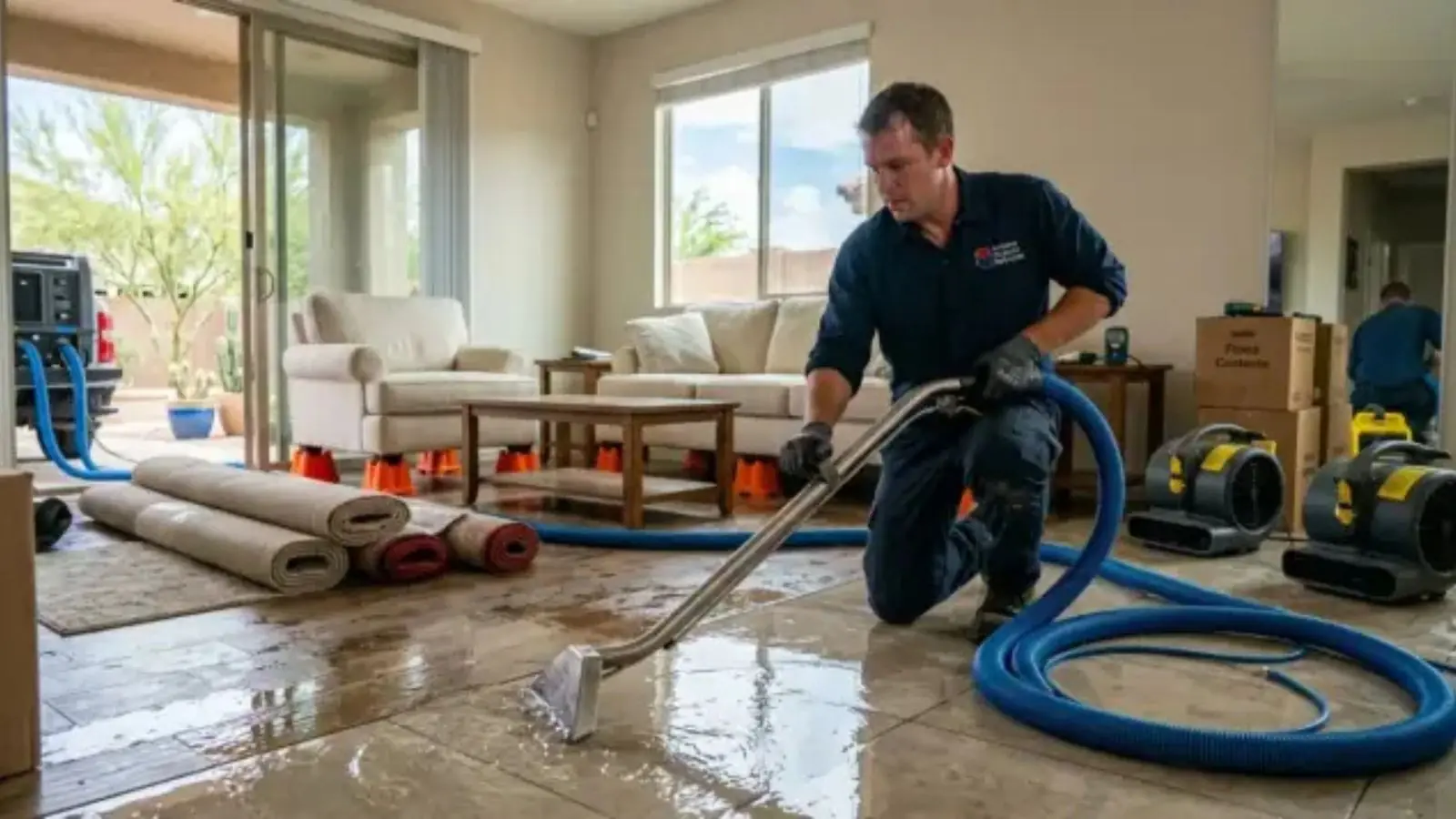
Emergency water removal in Tarzana is the extraction of standing water with pumps and extraction units, and it should start as soon as the source is stopped. The line is answered 24/7. While you wait, shut off the main water valve, stop using water in the house, lift furniture legs onto foil or blocks and keep everyone out of rooms where water has reached outlets.
Water removal is the first physical step in a loss. Drying, cleanup and repair follow from it, and they are covered on the water mitigation, water damage cleanup and water damage repair pages.
What extraction looks like
Crews choose the tool for the depth. Submersible pumps move deep water out through hoses, and wand-style extraction units pull water from carpet and hard floors. Truck-mounted equipment handles larger volumes.
Carpet that has been soaked for a short period can sometimes be extracted and dried in place. The pad below it is the part that often cannot be saved, because it acts like a sponge. Crews lift the carpet, remove the pad and dry the subfloor before deciding what goes back.
Burst pipe water damage
A burst pipe can release a surprising amount of water in the time it takes to find the shutoff. The first move is the main valve, usually found near where the supply line enters the house, and every adult in the household should know where it is.
Pipes burst for ordinary reasons. Supply lines under sinks fail at fittings, washing machine hoses split, water heaters leak at the base and irrigation lines can back up into crawl spaces. Each one produces clean water at first, so fast extraction can keep the loss at Category 1 and out of the larger cleanup tier.
When standing water is an emergency
Standing water is an emergency when it is rising, when it reaches outlets or panels, or when it is spreading into rooms that were dry. It is also an emergency if it has been present for more than a day, since Category 1 water can degrade and the plan changes.
A leak that is contained, small and on a hard surface can often be handled by mopping and ventilation. If you cannot tell, call and describe it. The crew can tell you which way to lean.
Shutoffs and what Tarzana's 1994 earthquake showed
The Northridge earthquake struck at 4:30 a.m. on January 17, 1994, with an epicenter in the Reseda area just west of Reseda Boulevard, close to Tarzana. Reports of the quake describe severed gas and water lines, some flooded streets and water pressure dropping to zero in some areas. Five days later an estimated 40,000 to 60,000 customers were still without public water service.
The lesson for a homeowner is practical. Find your water shutoff today, keep a wrench or the right key where you can reach it, and learn where the gas shutoff is as well. If you smell gas, leave the house and call 911 before anything else.
Do not wade through water near power
Never stand in water to reach a breaker. If the panel is wet or the water is touching outlets, stay out and call 911 and the utility. Call the restoration line once everyone is safe.
Real scenarios that lead to emergency water removal
The calls that come in follow a pattern. A pipe bursts under a bathroom sink and water seeps into a hallway. A washing machine valve fails and a laundry room floods. An air conditioner condensate line backs up and soaks a closet. A roof leak brings down a section of ceiling. Irrigation backflow floods a crawl space.
These are different sources, but extraction follows the same logic. Find the water, stop it, pull it out and start drying before the second day.
Extraction tools and what they do
Crews bring the tools that match the water depth and the floor type.
| Tool | Used for | Typical job |
|---|---|---|
| Submersible pump | Deep standing water | Flooded garage or lower level |
| Wand extraction unit | Wet carpet and hard floors | Kitchen or hallway after a pipe break |
| Truck-mounted extractor | Large volumes | Whole-floor or multi-room loss |
| Moisture meter | Finding hidden moisture | Walls, subfloors and baseboards |
What affects the price of water removal
Extraction is priced from the amount of water and the time it takes to remove it.
- Water volume and depthMore water takes longer and may need larger equipment.
- Rooms affectedWater that traveled into several rooms means more extraction passes.
- Floor typeCarpet, tile and wood each extract and dry differently.
- After-hours dispatchAsk dispatch how the visit is scoped when the call comes at night.
Ask for the scope in writing before work starts. To learn what this would mean for your address, call the line shown on this page.
Insurance and a burst pipe
Sudden and accidental water damage from a burst pipe is often covered by a homeowners policy, though gradual leaks and neglect are often treated differently. Check your policy, call your insurer and keep receipts for emergency steps. The California Department of Insurance advises reasonable steps to protect the property from further damage.
Where extraction leads
Once water is out, the structure needs drying, and contaminated water needs the steps on the flood damage restoration page. For a pipe burst in a home east of Tarzana, Encino residents can call the same line.
Safety steps before help arrives
Water and electricity do not mix, and standing water can hide hazards. Take these steps only if you can do so without risk.
- Do not enter a room with standing water if outlets, cords or appliances are in the water.
- Shut off the main water valve if the source is a supply line.
- Turn off power to the affected area at the breaker only if the panel is dry and you can reach it safely.
- Do not use a household vacuum on standing water.
- Keep children and pets out of the area, and wear boots and gloves if you must walk through it.
Frequently asked questions
Yes. Dispatch is answered 24/7, including holidays. A same-day visit is possible when a crew is free, but arrival time is not guaranteed.
Shut off the main water valve if a pipe is the source, lift valuables off wet floors, keep people and pets out of wet rooms, and photograph the damage. Stay away from outlets and panels the water has reached.
Sometimes. If the water was clean and extraction began quickly, the carpet can often be dried in place while the pad is replaced. Contaminated water makes replacement more likely.
No. Extraction removes standing water. Drying the framing, subfloor and walls is the next phase and is covered under water mitigation.