
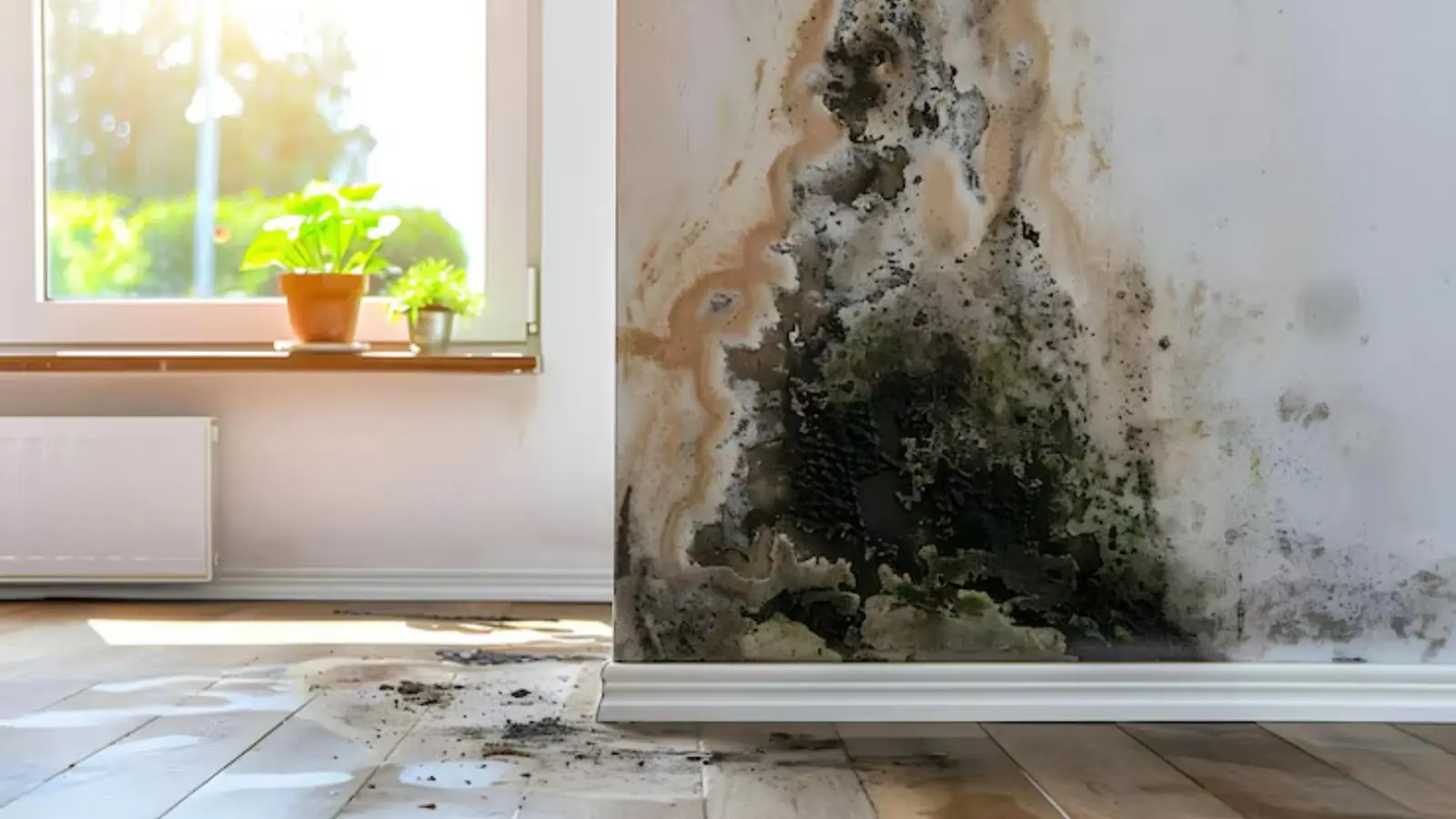
Mold follows moisture, and a Tarzana leak that is not dried can set the stage for it within a day or two. EPA guidance on mold says to fix plumbing leaks and other water problems as soon as possible and to dry all items completely. Speed matters more than any product you can spray on a wall.
This guide explains how water damage becomes a mold problem, the warning signs that something is still wet and what to do in the first two days after a leak.
Why moisture is the real problem
Mold needs three things: moisture, something organic to feed on and time. A leak supplies the first, and most houses supply the second without trying. Paper facing on drywall, carpet pad, wood framing, cabinet backs and dust all qualify.
That is why removing the moisture is the one reliable fix. Killing visible growth while a wall stays wet only leads to a return visit. The standard trade reference for professional mold work, ANSI/IICRC S520, builds the job around finding the moisture source first.
A rough timeline after a leak
Every leak differs, so treat these as general guideposts rather than exact clocks.
- Hours 0 to 24: water spreads and soaks porous materials. This is the best time to extract and begin drying.
- Hours 24 to 48: the common drying window. Materials that are still wet after this point are more likely to be removed than saved.
- Days 3 to 7: growth can begin on materials that stayed damp, and odors may appear. A musty smell is a clue that moisture is still present.
- Beyond a week: established growth is more likely, and removal rather than drying becomes the likely plan.
Warning signs that a leak is still wet
You do not need to see mold to suspect trouble. A smell like damp cardboard, paint that blisters or peels, a stain that darkens after rain or showers, wallpaper that lifts and a floor that feels slightly spongy all point to moisture that has not left.
A moisture meter settles the question quickly. It reads moisture inside drywall and wood, so it can find a wet wall that looks dry. If a crew tells you a wall is wet, ask to see the reading.
What Tarzana's climate means for mold
Tarzana has a hot-summer Mediterranean climate, and rain is concentrated in winter, with the wettest stretch from roughly January through March. Dry summers help materials dry once a leak is fixed, but the winter rain season is when roof and window leaks bring moisture into walls and attics.
The Woodland Hills area just west of Tarzana set the Los Angeles County temperature record of 121 degrees Fahrenheit on September 6, 2020, so air conditioners run hard here. A clogged condensate line can wet a closet or ceiling for weeks. The practical habit is to look at ceilings under air handlers each spring and after any storm.
What to do in the first two days
Stop the source of water, extract what is standing and open the space to air. Move belongings out of the wet area and photograph the damage. Call a restoration crew if carpet, drywall or wood is wet, since the point of the call is moisture readings, not cleaning.
The California Department of Insurance advises policyholders who suspect mold to contact their adjuster right away and not attempt cleanup themselves, since cleanup can spread spores. That advice is worth following before any scrubbing begins.
When it is a drying job and when it is a mold job
A wet area with no growth and no odor is a drying job, covered under water mitigation. Visible growth, a persistent smell or a leak that has run for weeks is a mold job, covered under mold remediation. A crew can tell you which side of the line you are on after a meter check.
Neighbors in Woodland Hills and Encino reach the same dispatch line.
Why moisture, not time alone, drives growth
Mold needs moisture, an organic food source and a suitable temperature. Drywall paper, wood, carpet and dust provide plenty of food, and indoor temperatures suit most species. That leaves moisture as the one factor you can control.
Fast, thorough drying is the best protection. Materials that stay wet for an extended period are far more likely to grow mold, which is why a small leak that goes unnoticed can cause more trouble than a large one handled quickly.
Hidden places growth likes
Water often travels to spots you do not check. Look behind baseboards, under sinks, inside closets that share a wall with a bathroom and around window frames after rain.
- Back of drywall near plumbing.
- Underside of carpet pad.
- Insulation in attics and wall cavities.
- Wood framing near a roof or window leak.
- Air handler pans and drain lines.
Linking the two jobs
When water damage and mold overlap, the order matters. Stop the source, dry the structure and remove damaged porous material, then address mold if it is present. Treating mold without drying leaves the cause in place.
Drying is covered under water mitigation, and containment and removal fall under mold remediation. A crew can assess both in one visit and tell you which comes first.
What not to do
Do not paint over stained drywall, run a fan across suspected growth or tear into a large area without protection. Do not rely on a bleach wipe on porous material, since it removes color and leaves the growth below the surface. Do not wait for the stain to prove itself, because by then the work is larger.
Frequently asked questions
It varies with temperature, materials and moisture. Industry guidance treats the first 24 to 48 hours as the drying window, and growth becomes more likely after several days of dampness.
Often yes. A damp, earthy smell in a closet, cabinet or room that had a leak suggests moisture remains. A meter reading can confirm.
Roof leaks that soak insulation and attic framing can stay wet for a long time because the space is closed. Have the attic checked after a storm, not months later.
Dry air helps, but a wet wall cavity or an air conditioner drain can stay damp regardless of outdoor weather. The moisture inside is what matters.
It can begin when materials stay wet for a day or two, though timing varies with temperature and the material. Prompt drying lowers the risk.