
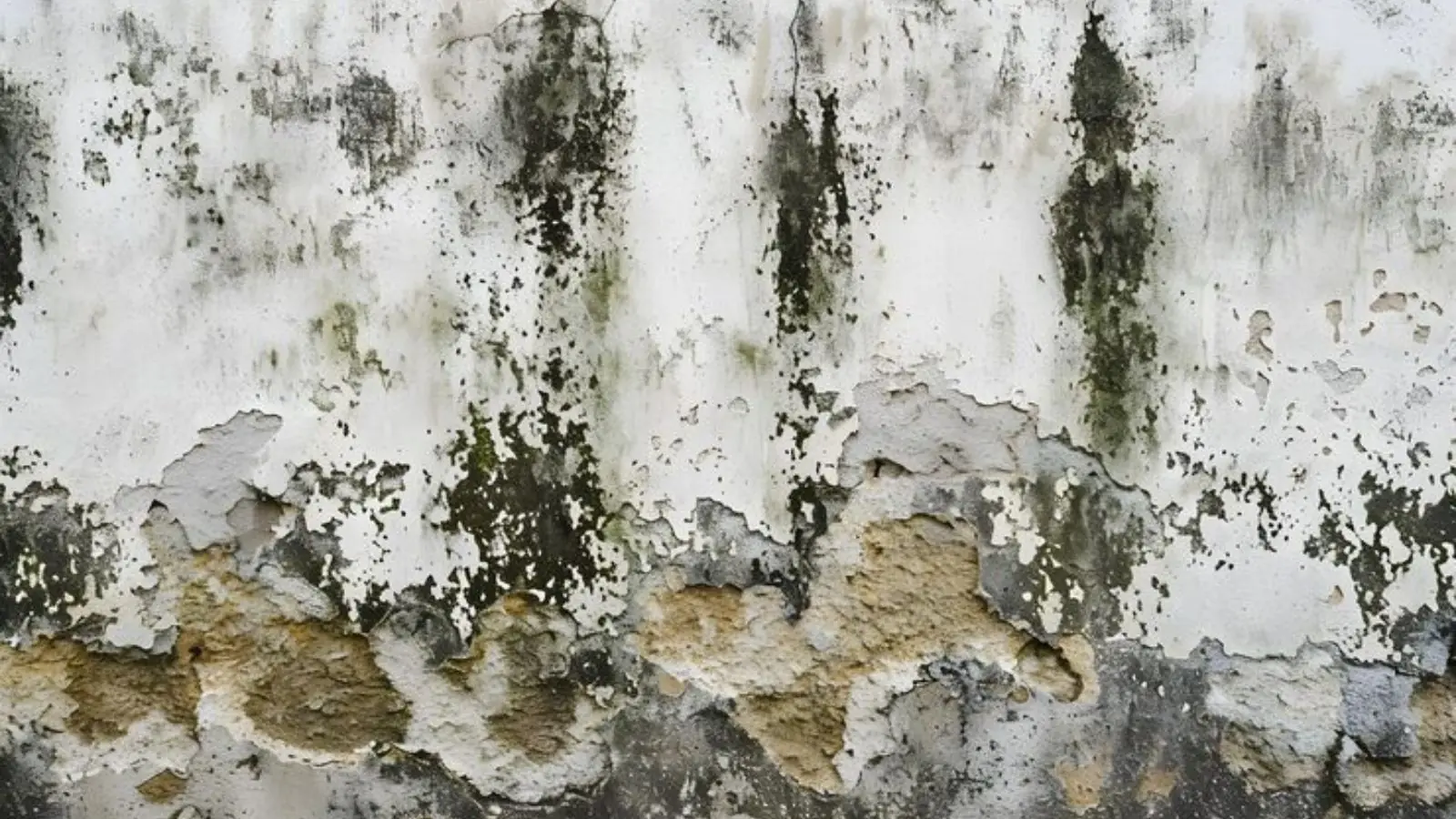
People use mold and mildew almost interchangeably, but the words usually point to different situations. Mildew generally means a flat, surface-level growth, often on a shower wall or a window sill, while mold is the broader term for growth that can sit on or inside materials. Color alone does not tell you which you have, and the cleanup logic for both starts with the same question: where is the moisture coming from?
This guide separates the terms, explains why black color is a weak clue and describes what to do next without diagnosing anyone's health, which is a question for a physician.
What people usually mean by each word
Mildew is the word most often used for a thin, powdery or downy growth on a damp surface such as grout, a shower curtain or a windowsill. It tends to sit on top of the material and wipes off or scrubs away.
Mold is the word for a wider group of growth that can appear in many colors and textures and can sink into porous materials such as drywall, wood and carpet. Growth on those materials usually cannot be scrubbed away.
A practical comparison
These are everyday patterns, not laboratory definitions.
| Trait | Often called mildew | Often called mold |
|---|---|---|
| Where it appears | Hard, damp surfaces like grout, tile and sills | Drywall, wood, carpet, insulation and hidden cavities |
| How it looks | Flat, powdery or thin | Fuzzy, spotty or layered, in many colors |
| How it responds to cleaning | Often wipes or scrubs off | Often needs the material removed |
| What it suggests | Surface humidity | Moisture that has soaked in |
Why black is a poor clue
Dark growth gets called black mold, and the name carries a lot of fear. But color varies with the material, the age of the growth and the moisture, and different kinds can look alike. A trade professional does not rely on color to decide how to handle it.
The more useful questions are where it is, how big it is, what it is growing on and whether the moisture source is fixed. Those answers set the plan. For anything about symptoms or health, ask your physician, since this site does not diagnose.
What to do for a small surface spot
Fix the humidity or leak first. Then clean the hard surface with detergent and water, rinse and dry it fully, and keep ventilation going. Wear gloves and avoid stirring up dust.
Do not mix cleaning chemicals. Bleach should never be combined with ammonia or acids, including vinegar, because the mixture releases hazardous fumes. If the spot returns within weeks, the moisture is still there.
Why Tarzana homes see both
Tarzana's rain is concentrated in winter, and the neighborhood's cooler, closed-up months are when bathrooms and windows stay damp. In summer, air conditioning drains and attic leaks take over. Both can feed growth, though in different places.
If you live in a condo or apartment along the Ventura Boulevard corridor, shared walls and plumbing mean a neighbor's leak can feed growth on your side of a wall. Tell your manager, since the California Department of Insurance advises policyholders who suspect mold to contact their insurer right away rather than clean it up themselves.
Why the color is not a reliable test
People often assume black means dangerous and white or gray means harmless. In practice, color depends on the species, the material it grows on and the light, and many organisms look alike to the eye. Only lab testing can name a species, and even then the result does not change how the moisture problem is handled.
This site does not diagnose health effects. If someone in the home has symptoms that concern them, a physician is the right person to ask. For the building, the practical question is how much material is affected and why it is wet.
Texture and location give better clues
Mildew tends to grow flat on a surface, often as a powdery or downy film on shower walls, window frames and fabric. Mold more often grows into materials and can look fuzzy, spotted or slimy. Either can be present behind a wall where you cannot see it.
- Flat film that wipes off and does not return suggests a surface issue.
- Spots that return within days despite cleaning suggest a moisture source.
- Staining that bleeds through paint suggests growth inside the wall.
- A smell without visible growth suggests a hidden area.
What matters more than the name
Both need moisture, so stopping the water is the first step. After that, small surface spots on hard materials can be cleaned with detergent and water. Larger areas, porous materials and growth after a leak are usually handled as mold remediation, with containment and removal of damaged material.
If the cause was a burst pipe or roof leak, the drying comes first under water mitigation. Skipping that step is a common reason growth returns.
When to bring in a crew
Call if the growth is on drywall, wood or carpet, if it covers more than a small patch, if it follows a leak or flood or if a smell lingers with nothing visible. A crew checks moisture, contains the area and removes or cleans materials following ANSI/IICRC S520. See mold remediation for the stages.
If the cause was a leak that is still wet, water mitigation comes first. Neighbors in Woodland Hills and Sherman Oaks can call the same line.
Frequently asked questions
Color alone does not tell you. This site does not diagnose health effects, and questions about symptoms belong to your physician. For the home, the plan depends on location, size and moisture.
Not reliably. Surface growth on grout is often called mildew, and growth on drywall or wood is usually called mold, but only an inspection of the material and the moisture will tell you how to handle it.
Photograph it, tell your manager in writing and ask them to find the moisture source. If the wall is soft or the spots keep returning, a meter reading helps decide what to do.
Not always. It can be humidity, but if it keeps coming back, check for a hidden leak.
Not usually for a small surface spot. For larger areas, a crew can explain what testing would and would not tell you before you decide.